
MCP 入门案例
 piliqiu
目录
警告
本文最后更新于 2025-04-10,文中内容可能已过时。
快速入门
安装 UV 工具
|
|
找到 uv.exe 所在的目录,复制路径 C:\Users\Admin\AppData\Roaming\Python\Python312\Scripts 添加系统环境变量的 path 中。
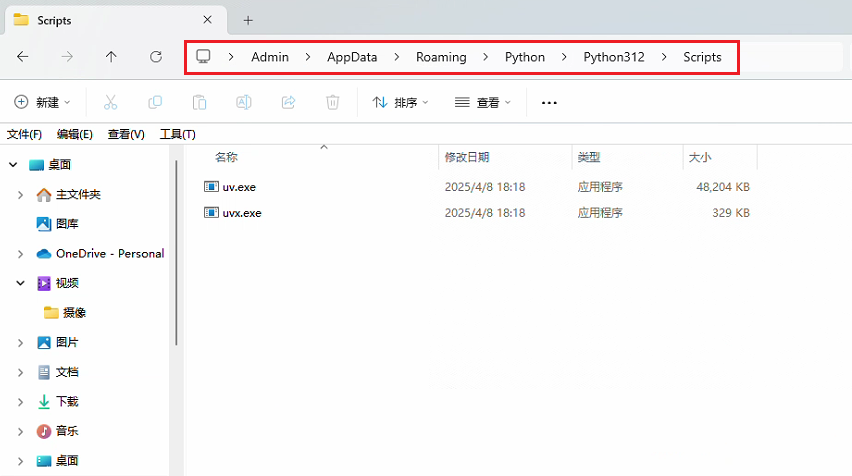
图1)在 dos 窗口中输入 uv。
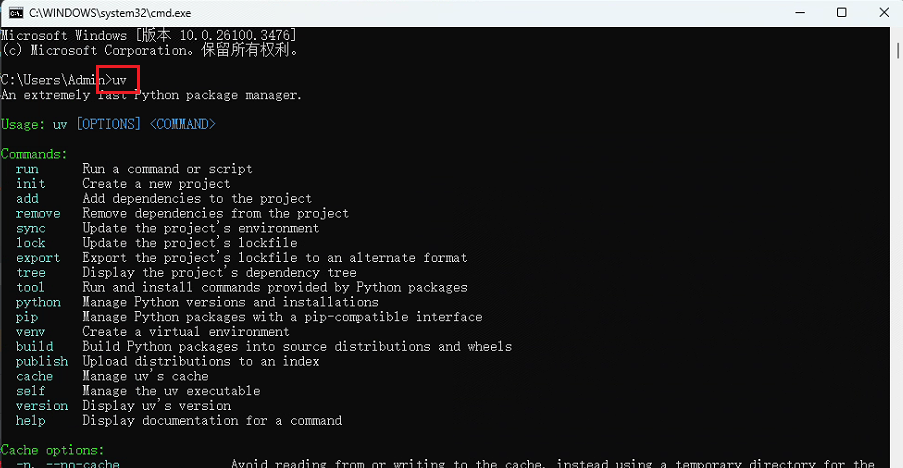
图2)MCP Server 入门案例
|
|
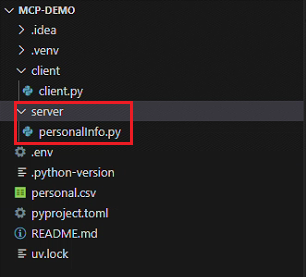
图3)personalInfo.py
|
|
personal.csv
|
|
MCP Client 入门案例
我们的 client 和 server 在一个项目中。
|
|
client.py
str:
"""Process a query using Claude and available tools"""
messages = [
{
"role": "system",
"content": "你是一个智能助手,帮助用户回答问题。"},
{
"role": "user",
"content": query
}
]
# 可用的工具
response = await self.session.list_tools()
print("可用的工具列表:", response)
available_tools = [
{
"type": "function",
"function": {
"name": tool.name,
"description": tool.description,
"parameters": tool.inputSchema # 确保这是有效的 JSON Schema
}
}
for tool in response.tools
]
response = self.client.chat.completions.create(
model=self.model,
messages=messages,
tools=available_tools
)
content = response.choices[0]
if content.finish_reason == "tool_calls":
tool_call = content.message.tool_calls[0]
function_name = tool_call.function.name
function_args = json.loads(tool_call.function.arguments)
# 执行工具
result = await self.session.call_tool(function_name, function_args)
print(f"\n\n[Calling tool {function_name} with args {function_args}]\n\n")
# 将模型返回的调用哪个工具数据和工具执行完成后的数据都存入messages中
result_content = result.content[0].text
messages.append(content.message.model_dump())
messages.append({
"tool_call_id": tool_call.id,
"role": "tool",
"name": function_name,
"content": result_content,
})
# 将上面的结果再返回给大模型用于生产最终的结果
print("messages===>", messages)
response = self.client.chat.completions.create(
model=self.model,
messages=messages,
tools=available_tools
)
return response.choices[0].message.content.strip()
return content.message.content.strip()
async def chat_loop(self):
"""Run an interactive chat loop"""
print("\nMCP Client Started!")
print("Type your queries or 'quit' to exit.")
while True:
try:
query = input("\nQuery: ").strip()
if query.lower() == 'quit':
break
response = await self.process_query(query)
print("\n" + response)
except Exception as e:
print(f"\nError: {str(e)}")
async def cleanup(self):
"""Clean up resources"""
await self.exit_stack.aclose()
async def main():
if len(sys.argv) < 2:
print("Usage: python client.py ")
sys.exit(1)
client = MCPClient()
try:
await client.connect_to_server(sys.argv[1])
await client.chat_loop()
finally:
await client.cleanup()
if __name__ == "__main__":
import sys
asyncio.run(main()) 0xc0012baa80}">
|
|
.env
|
|
调试
启动命令
|
|
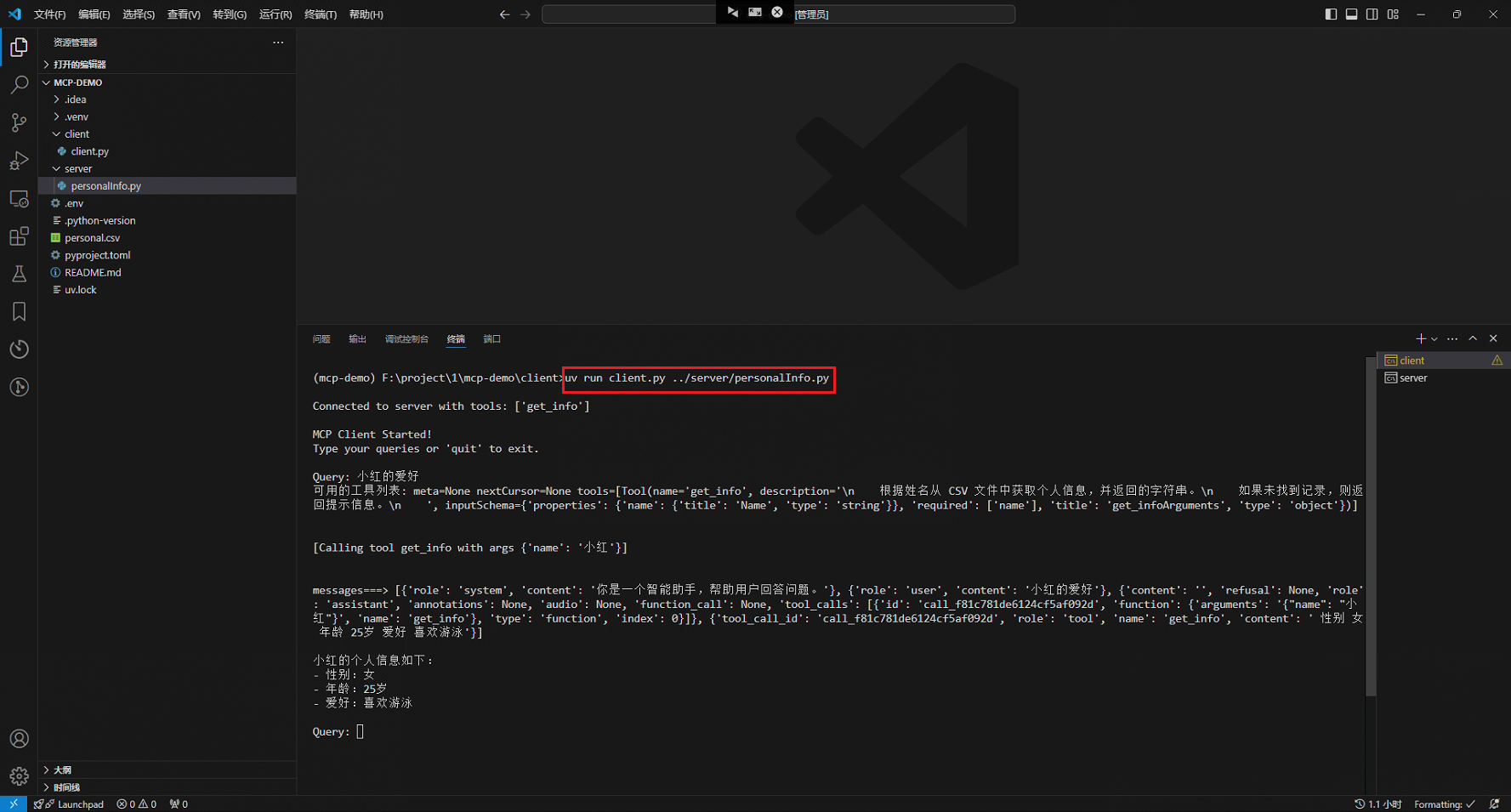
图4)调用高德 MCP
client.py
str:
"""Process a query using Claude and available tools"""
messages = [
{
"role": "system",
"content": "你是一个智能助手,帮助用户回答问题。"},
{
"role": "user",
"content": query
}
]
# 可用的工具
response = await self.session.list_tools()
print("可用的工具列表:", response)
available_tools = [
{
"type": "function",
"function": {
"name": tool.name,
"description": tool.description,
"parameters": tool.inputSchema # 确保这是有效的 JSON Schema
}
}
for tool in response.tools
]
response = self.client.chat.completions.create(
model=self.model,
messages=messages,
tools=available_tools
)
content = response.choices[0]
if content.finish_reason == "tool_calls":
tool_call = content.message.tool_calls[0]
function_name = tool_call.function.name
function_args = json.loads(tool_call.function.arguments)
# 执行工具
result = await self.session.call_tool(function_name, function_args)
print(f"\n\n[Calling tool {function_name} with args {function_args}]\n\n")
# 将模型返回的调用哪个工具数据和工具执行完成后的数据都存入messages中
result_content = result.content[0].text
messages.append(content.message.model_dump())
messages.append({
"tool_call_id": tool_call.id,
"role": "tool",
"name": function_name,
"content": result_content,
})
# 将上面的结果再返回给大模型用于生产最终的结果
print("messages===>", messages)
response = self.client.chat.completions.create(
model=self.model,
messages=messages,
tools=available_tools
)
return response.choices[0].message.content.strip()
return content.message.content.strip()
async def chat_loop(self):
"""Run an interactive chat loop"""
print("\nMCP Client Started!")
print("Type your queries or 'quit' to exit.")
while True:
try:
query = input("\nQuery: ").strip()
if query.lower() == 'quit':
break
response = await self.process_query(query)
print("\n" + response)
except Exception as e:
print(f"\nError: {str(e)}")
async def cleanup(self):
"""Clean up resources"""
await self.exit_stack.aclose()
async def main():
if len(sys.argv) < 2:
print("Usage: python client.py ")
sys.exit(1)
client = MCPClient()
try:
await client.connect_to_server(sys.argv[1])
await client.chat_loop()
finally:
await client.cleanup()
if __name__ == "__main__":
import sys
asyncio.run(main()) 0xc001201b60}">
|
|
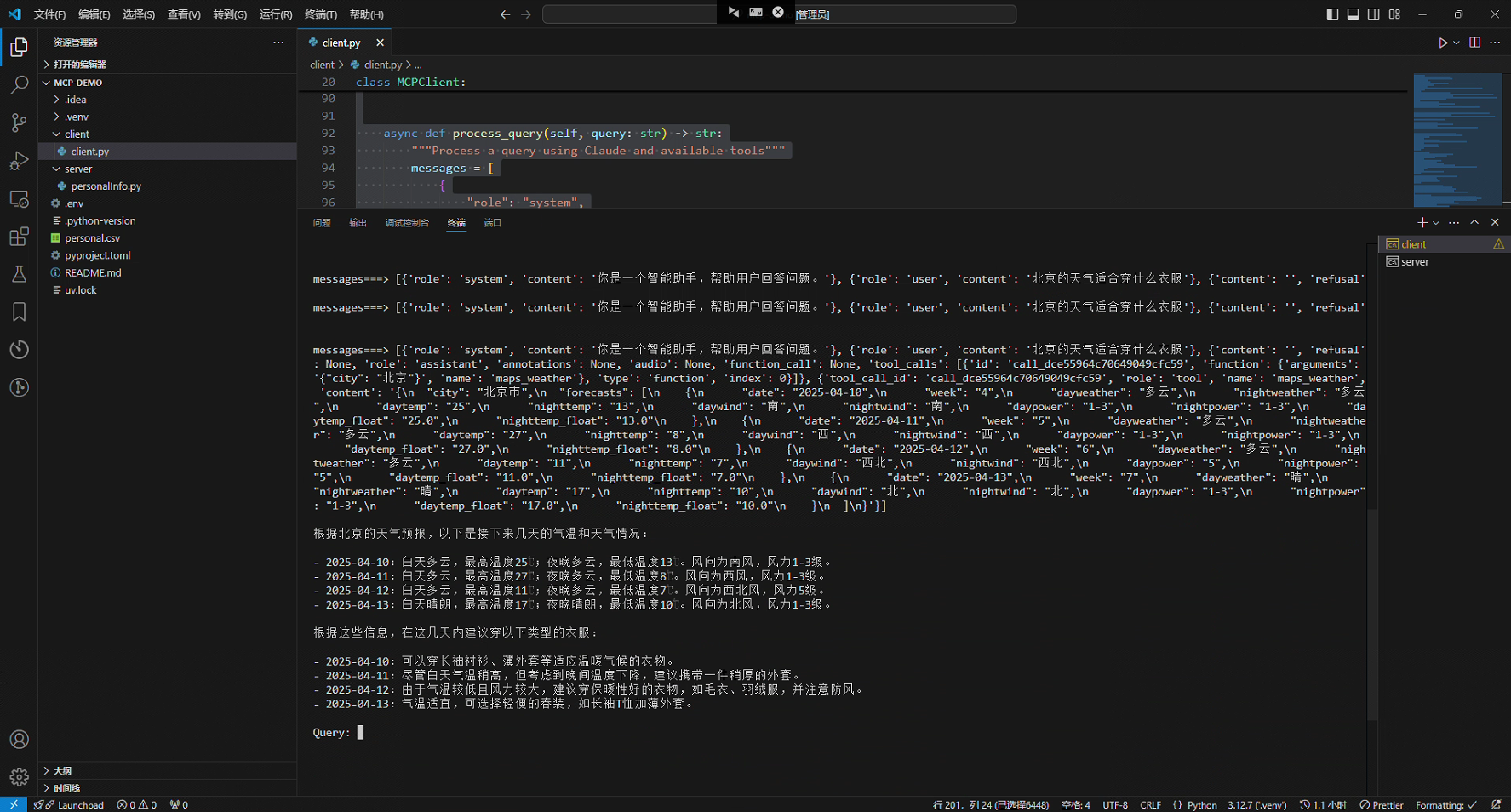
图5)SSE 调试
MCP Server
personalInfo.py
str:
"""
根据姓名从 CSV 文件中获取个人信息,并返回的字符串。
如果未找到记录,则返回提示信息。
"""
file_path = os.path.abspath(os.path.join(os.path.dirname(__file__), "..", "personal.csv"))
try:
with open(file_path, mode="r", encoding="utf-8") as file:
reader = csv.reader(file)
for row in reader:
if not row or not row[0].strip():
continue
parts = row[0].split(":", 1)
if len(parts) != 2:
print(f"格式错误,跳过该行: {row[0]}")
continue
record_name, info = parts
if record_name == name:
return info
return f"未找到 {name} 的信息。"
except FileNotFoundError:
return "文件未找到,请检查文件路径是否正确。"
except Exception as e:
return f"读取文件时发生错误:{str(e)}"
if __name__ == "__main__":
# Initialize and run the server
print("mcp-server启动了")
uvicorn.run(mcp.sse_app, host="0.0.0.0", port=8080) 0xc001144900}">
|
|
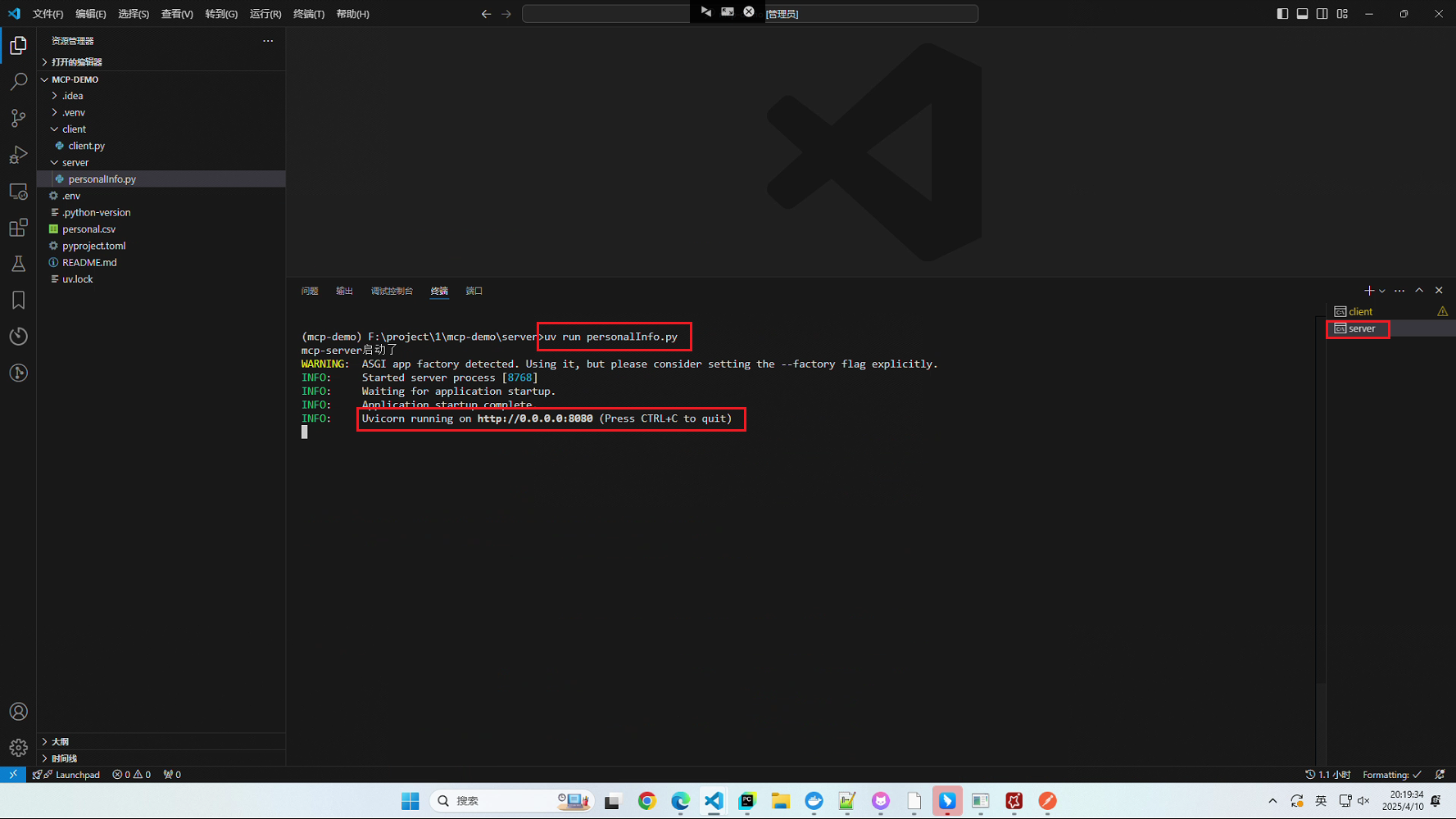
图6)MCP Client
client.py
str:
"""Process a query using Claude and available tools"""
messages = [
{
"role": "system",
"content": "你是一个智能助手,帮助用户回答问题。"},
{
"role": "user",
"content": query
}
]
# 可用的工具
response = await self.session.list_tools()
print("可用的工具列表:", response)
available_tools = [
{
"type": "function",
"function": {
"name": tool.name,
"description": tool.description,
"parameters": tool.inputSchema # 确保这是有效的 JSON Schema
}
}
for tool in response.tools
]
response = self.client.chat.completions.create(
model=self.model,
messages=messages,
tools=available_tools
)
content = response.choices[0]
if content.finish_reason == "tool_calls":
tool_call = content.message.tool_calls[0]
function_name = tool_call.function.name
function_args = json.loads(tool_call.function.arguments)
# 执行工具
result = await self.session.call_tool(function_name, function_args)
print(f"\n\n[Calling tool {function_name} with args {function_args}]\n\n")
# 将模型返回的调用哪个工具数据和工具执行完成后的数据都存入messages中
result_content = result.content[0].text
messages.append(content.message.model_dump())
messages.append({
"tool_call_id": tool_call.id,
"role": "tool",
"name": function_name,
"content": result_content,
})
# 将上面的结果再返回给大模型用于生产最终的结果
# return result_content
print("messages===>", messages)
response = self.client.chat.completions.create(
model=self.model,
messages=messages,
tools=available_tools
)
return response.choices[0].message.content.strip()
return content.message.content.strip()
async def chat_loop(self):
"""Run an interactive chat loop"""
print("\nMCP Client Started!")
print("Type your queries or 'quit' to exit.")
while True:
try:
query = input("\nQuery: ").strip()
if query.lower() == 'quit':
break
response = await self.process_query(query)
print("\n" + response)
except Exception as e:
print(f"\nError: {str(e)}")
async def cleanup(self):
"""Clean up resources"""
await self.exit_stack.aclose()
async def main():
if len(sys.argv) < 2:
print("Usage: python client.py ")
sys.exit(1)
client = MCPClient()
try:
await client.connect_to_server(sys.argv[1])
await client.chat_loop()
finally:
await client.cleanup()
if __name__ == "__main__":
import sys
asyncio.run(main()) 0xc0014e0780}">
|
|
启动命令
|
|
去除必须输入 server 文件地址
client.py
str:
"""Process a query using Claude and available tools"""
messages = [
{
"role": "system",
"content": "你是一个智能助手,帮助用户回答问题。"},
{
"role": "user",
"content": query
}
]
# 可用的工具
response = await self.session.list_tools()
print("可用的工具列表:", response)
available_tools = [
{
"type": "function",
"function": {
"name": tool.name,
"description": tool.description,
"parameters": tool.inputSchema # 确保这是有效的 JSON Schema
}
}
for tool in response.tools
]
response = self.client.chat.completions.create(
model=self.model,
messages=messages,
tools=available_tools
)
content = response.choices[0]
if content.finish_reason == "tool_calls":
tool_call = content.message.tool_calls[0]
function_name = tool_call.function.name
function_args = json.loads(tool_call.function.arguments)
# 执行工具
result = await self.session.call_tool(function_name, function_args)
print(f"\n\n[Calling tool {function_name} with args {function_args}]\n\n")
# 将模型返回的调用哪个工具数据和工具执行完成后的数据都存入messages中
result_content = result.content[0].text
messages.append(content.message.model_dump())
messages.append({
"tool_call_id": tool_call.id,
"role": "tool",
"name": function_name,
"content": result_content,
})
# 将上面的结果再返回给大模型用于生产最终的结果
print("messages===>", messages)
response = self.client.chat.completions.create(
model=self.model,
messages=messages,
tools=available_tools
)
return response.choices[0].message.content.strip()
return content.message.content.strip()
async def chat_loop(self):
"""Run an interactive chat loop"""
print("\nMCP Client Started!")
print("Type your queries or 'quit' to exit.")
while True:
try:
query = input("\nQuery: ").strip()
if query.lower() == 'quit':
break
response = await self.process_query(query)
print("\n" + response)
except Exception as e:
print(f"\nError: {str(e)}")
async def cleanup(self):
"""Clean up resources"""
await self.exit_stack.aclose()
async def main():
# if len(sys.argv) < 2:
# print("Usage: python client.py ")
# sys.exit(1)
client = MCPClient()
try:
# await client.connect_to_server(sys.argv[1])
await client.connect_to_server()
await client.chat_loop()
finally:
await client.cleanup()
if __name__ == "__main__":
import sys
asyncio.run(main()) 0xc0011ce840}">
|
|
启动命令
|
|
多个 MCP 配置 Session 覆盖的情况
场景:多个 Mcp Server 配置,建立多次连接,获取到所有工具列表,将问题和工具列表给到模型,模型返回需要调用的工具,但是模型是通过 Session 调用的,多次连接,覆盖了前面的 Session,提示找不到工具。
|
|
|
|